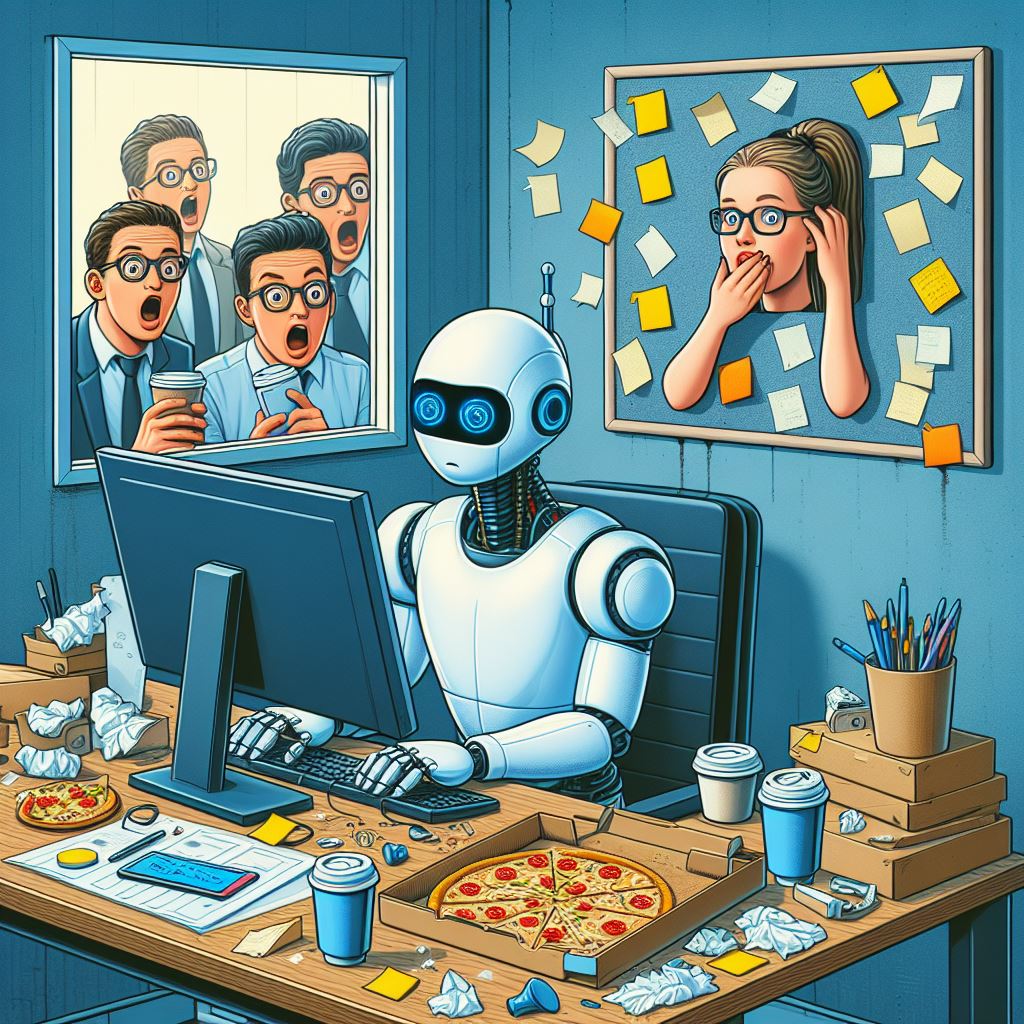

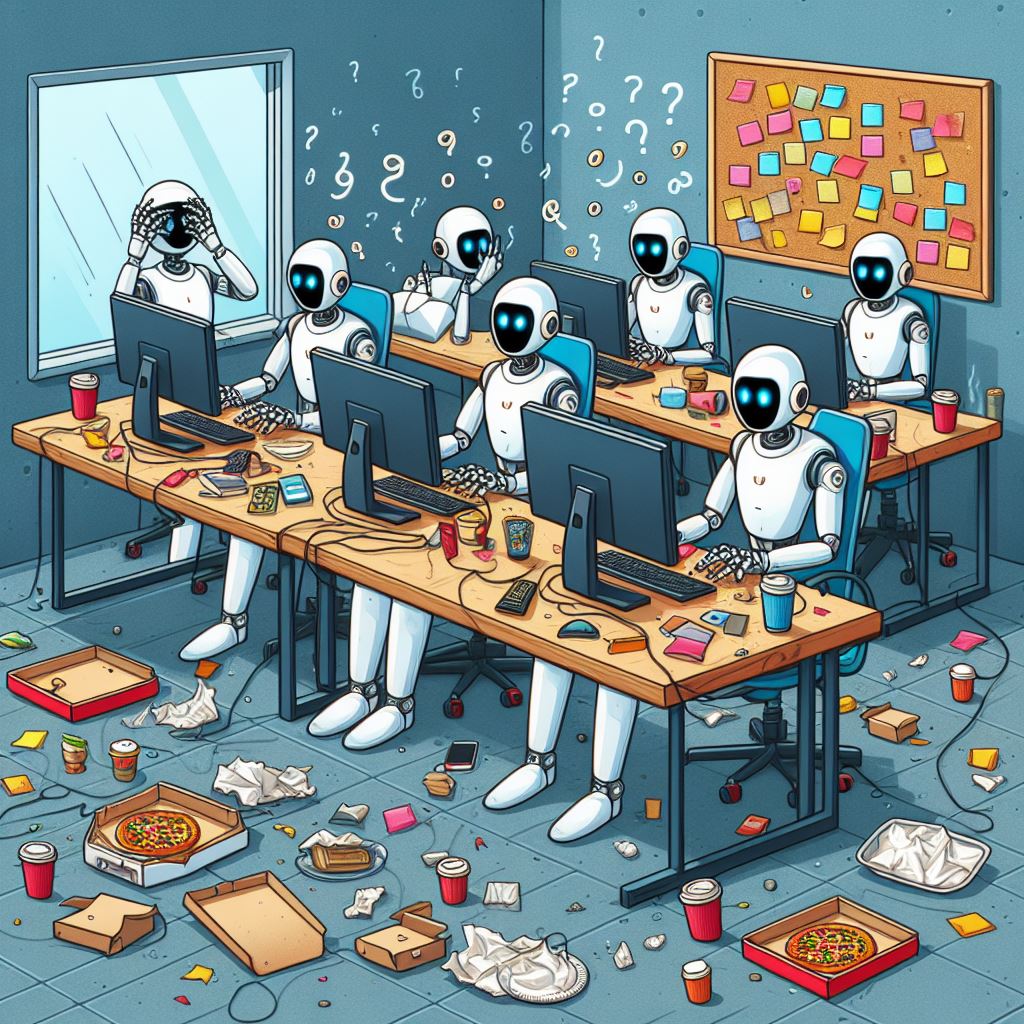
In recent times, there’s been a growing chorus of concern among the coding community – rumors are swirling that our beloved developer chairs might soon be swapped out for sleek AI-powered recliners. Yes, you heard that right. It seems artificial intelligence is eyeing our job listings with an appetite for them, leaving coders everywhere quaking in their hoodies. From Silicon Valley to the back offices of startups, the chatter about AI snatching our coding gigs is spreading faster than a rogue JavaScript bug. But fear not, fellow developers, for our debugging skills are as sharp as ever, and we’re ready to outsmart these upstart algorithms, one line of code at a time.
Now, don’t get me wrong, AI is impressive. It can churn through data faster than you can say “segmentation fault” and spot patterns with the precision of a seasoned regex master. But can it really replace the creative chaos that is software development? Can it capture the sheer brilliance of a developer’s “aha” moment, that magical instant when a complex problem finally unravels like a poorly documented API?
Sure, AI might be able to crank out some boilerplate code or fix the occasional syntax error, but can it navigate the tangled web of dependencies, edge cases, and legacy spaghetti code that we developers wrestle with on a daily basis? Can it handle the late-night debugging sessions fueled by caffeine and sheer determination, where the only thing keeping us going is the promise of a functioning build and a well-deserved nap?
And what about the human touch – the companionship of collaborating with fellow developers, the satisfaction of solving a particularly thorny problem, the joy of seeing our code come to life in the hands of users? Can AI replicate the quirky humor of our commit messages or the existential dread of merge conflicts? Can it understand the subtle nuances of user feedback or the importance of building accessible and inclusive software?
As developers, we’re more than just code monkeys typing at keyboards. We’re problem-solvers, innovators, and storytellers. We’re the architects of the digital world, shaping the way people work, play, and connect. And while AI might be able to automate some aspects of our work, it can never replace the human ingenuity and empathy that drive us to create software that truly makes a difference.
As we navigate this brave new world of AI in software development, it’s essential to consider the broader implications and potential applications of artificial intelligence. While some may fear the rise of the machines, others see it as an opportunity to revolutionize the way we approach software development and design.
Take, for example, the realm of computer game development, where AI change traditional workflows and unlock new creative possibilities. From level design to procedural content generation, AI-powered tools are already making waves in the gaming industry, enabling developers to create more immersive and dynamic gaming experiences than ever before.
One area where AI is making significant strides is in level design. Traditionally, designing game levels has been a labor-intensive process, requiring designers to carefully craft every detail by hand. However, AI-powered tools are now emerging that can automate and optimize this process, allowing developers to generate vast and intricate game worlds with just the click of a button. These tools can analyze player behavior data, generate procedural content, and even adapt levels in real-time based on player feedback, leading to more engaging and playable gaming experiences.
But it’s not just level design that stands to benefit from AI. Workflow organization and project management are also ready for improvement, thanks to AI-powered project management tools that can analyze team performance data, identify bottlenecks, and optimize task allocation. Additionally, AI-driven collaboration platforms can facilitate communication and coordination among team members, streamlining the game development process and ensuring projects stay on schedule and within budget.
In the realm of graphics and modeling, AI is also making waves, with tools that can generate high-fidelity textures, animate characters, and even generate entire game worlds using techniques such as neural networks and procedural generation. These AI-powered tools enable developers to create visually stunning games more efficiently and cost-effectively than ever before, freeing up time and resources to focus on other aspects of game development.
But while the potential benefits of AI in game development are vast, there are also challenges and ethical considerations to consider. For example, there are concerns about the potential for AI to perpetuate biases or stereotypes in game content, as well as questions about data privacy and security. Furthermore, there is the risk of overreliance on AI leading to a loss of creative control or human touch in game development.
Conclusion
In conclusion, the future of artificial intelligence in computer game development is bright and promising. From automating routine tasks to enhancing player experiences, AI holds the potential to revolutionize every aspect of the game development process. By embracing AI-driven technologies and leveraging them creatively, developers can create more immersive, engaging, and innovative games for players to enjoy. However, it is essential to proceed with caution and consider the ethical implications of AI in game development to ensure that games remain inclusive, diverse, and reflective of the values of society.
To be serious, let’s not be naive. Today, AI is as dumb as hell. Fed by fake news, bad coding practices, and all sorts of internet crap, it still makes mistakes with basic logic and struggles to comprehend many concepts. Until it gains self-awareness, “ex nihilo” creativity, and genuine personality, we are safe from a Matrix-like reality. And don’t even ask about understanding of human emotions. AI might be able to analyze tons of text and data, but ask it to recognize sarcasm or interpret a subtle facial expression, and it’s more lost than a GPS in a corn maze. Until it starts developing a sense of humor and learns to appreciate a good pun, we’re safe from being outsmarted by our own creations.
So, to all the developers out there worried about being replaced by AI, I say this: Embrace the challenge, but don’t sell yourself short. Your skills, your creativity, and your passion for building great software are irreplaceable. And if AI ever does come knocking on our door, we’ll be ready—armed with our wit, our wisdom, and maybe just a touch of paranoia. After all, you never know when a rogue AI might decide to go full HAL 9000 on us. 😉